Plantar Fasciitis Physical Therapy in Northern New Jersey
We treat stubborn plantar fasciitis and heel pain — with on-site shockwave for the tough cases — for patients throughout the area, including Hawthorne, Totowa, Paterson, Fairfield, Riverdale, Bloomingdale, Butler, Kinnelon, Lincoln Park, Little Falls, Pequannock, Pompton Lakes, Woodland Park. Not sure if we are close to you? Call and ask — most patients are a 10–20 minute drive.
Quick Answer: Physical therapy for plantar fasciitis near me in Wayne, NJ (Passaic County) is provided by Dr. Rob Letizia, PT, DPT at Spectrum Therapeutics. Plantar fasciitis — stabbing heel pain worst with first steps in the morning — resolves in 6–12 weeks with manual therapy, progressive loading of the plantar fascia, and calf-complex stretching in 90%+ of cases. For stubborn cases, our on-site shockwave therapy is the evidence-supported next step - 61% success versus 42% on placebo in a randomized trial (Gerdesmeyer et al., Am J Sports Med 2008, 245 patients). No referral needed in NJ. Medicare plans require a doctor's script. Call (973) 689-7123.
Medically reviewed by Dr. Rob Letizia, PT, DPT. Updated April 2026.
Key Takeaways
- Plantar fasciitis affects ~10% of adults at some point — runners, walkers, teachers, and nurses are highest risk.
- Heavy slow-loaded calf raises (Rathleff protocol) outperform stretching alone per 2025 Br J Sports Med.
-
Shockwave therapy is the evidence-supported next step for chronic cases unresponsive to 6+ weeks of PT - 61% success versus 42% on placebo in a randomized trial (Gerdesmeyer et al., Am J Sports Med 2008, 245 patients) — Spectrum Therapeutics offers dedicated shockwave on-site.
- Orthotics help some, but strengthening beats orthotics for long-term recovery in most patients.
- Covered by Medicare, Horizon BCBSNJ, Aetna, Cigna, United. No referral under NJ direct access.
Related: Shockwave Therapy for Plantar Fasciitis | Foot & Ankle Pain Treatment
Plantar Fasciitis Treatment in Wayne, NJ
If the first few steps out of bed each morning feel like you're walking on a bruise, you're probably dealing with plantar fasciitis. It's one of the most common foot conditions we treat at Spectrum Therapeutics of NJ, and the good news is that it responds well to the right physical therapy. The key word there is "right," because stretching alone or just resting usually isn't enough.
On This Page
🦶
Plantar Fasciitis
Inflammation of the plantar fascia causing heel pain, especially with first steps in the morning
💨
Heel Spurs
Bony calcium deposits on the calcaneus often associated with chronic plantar fascia stress
⚡
Achilles Tendinopathy
Degenerative changes in the Achilles tendon contributing to heel and arch pain
🧬
Flat Feet / Overpronation
Excessive arch collapse increasing strain on the plantar fascia and surrounding tissues
🔨
Metatarsalgia
Ball-of-foot pain from abnormal pressure distribution and forefoot mechanics
🎓
Posterior Tibial Tendinitis
Inner ankle and arch pain from tendon dysfunction affecting foot stability
90%
of plantar fasciitis cases resolve with physical therapy and avoid surgery entirely
🎓
Evidence-Based Treatment
✅
NJ Direct Access — No Referral
📋
Most Insurance Accepted
What Is Plantar Fasciitis?
Plantar fasciitis is inflammation of the plantar fascia, a thick band of connective tissue that runs along the bottom of your foot connecting your heel bone to your toes. It is the most common cause of heel pain, affecting approximately 2 million Americans each year. The plantar fascia supports the arch and absorbs shock when you walk or run. Plantar fasciitis develops when that tissue becomes irritated and inflamed, usually at the point where it attaches to the heel.
Common symptoms include:
- Sharp or stabbing pain at the bottom of the heel, especially with your first steps in the morning
- Pain that improves after moving around but returns after long periods of standing or sitting
- Stiffness and tenderness along the arch of the foot
- Pain that gets worse after exercise, not during it
- Heel tenderness that worsens throughout the day
Risk factors include tight calf muscles, flat feet or high arches, obesity, prolonged standing at work, and running or walking on hard surfaces. People ages 40-60 are most commonly affected.
Six months of heel pain and I could barely walk in the morning. Dr. Rob used manual therapy and specific exercises. In 4 weeks I was walking pain-free.
✓ Pain-free walking
✓ Morning pain gone
✓ 4 weeks
What Causes Plantar Fasciitis?
Plantar fasciitis develops when repetitive stress causes micro-tears in the plantar fascia. Common causes include:
- Tight calf muscles and Achilles tendon pulling on the heel
- Sudden increase in walking, running, or standing activity
- Poor footwear without adequate arch support
- Flat feet (overpronation) or very high arches
- Jobs requiring prolonged standing (teachers, nurses, factory workers)
- Age-related degeneration of the plantar fascia
- Excess body weight increasing load on the foot
Why Plantar Fasciitis Doesn't Just Go Away
A lot of people assume plantar fasciitis will resolve on its own with rest. Sometimes it does. But for many people, the pain lingers for months or even years, and here's why.
Plantar fasciitis is rarely just a foot problem. Tightness in your calves, stiffness in the ankle joint, weakness in the muscles that support your arch, and even the way your hips and knees move can all contribute to ongoing strain on the plantar fascia. If you only treat the foot without addressing what's causing the overload, the tissue stays irritated.
That's why physical therapy works when stretching, insoles, and cortisone shots haven't. A good PT looks at the whole picture.
Ready to start feeling better? Call Dr. Rob Letizia directly at (973) 689-7123 to schedule your evaluation. Same-day appointments available. No referral needed — except on Medicare, which requires a script from your doctor.
Ready to start feeling better? Call Dr. Rob Letizia directly at (973) 689-7123 to schedule your evaluation. Same-day appointments available. No referral needed — except on Medicare, which requires a script from your doctor.
How Manual Therapy Treats Plantar Fasciitis
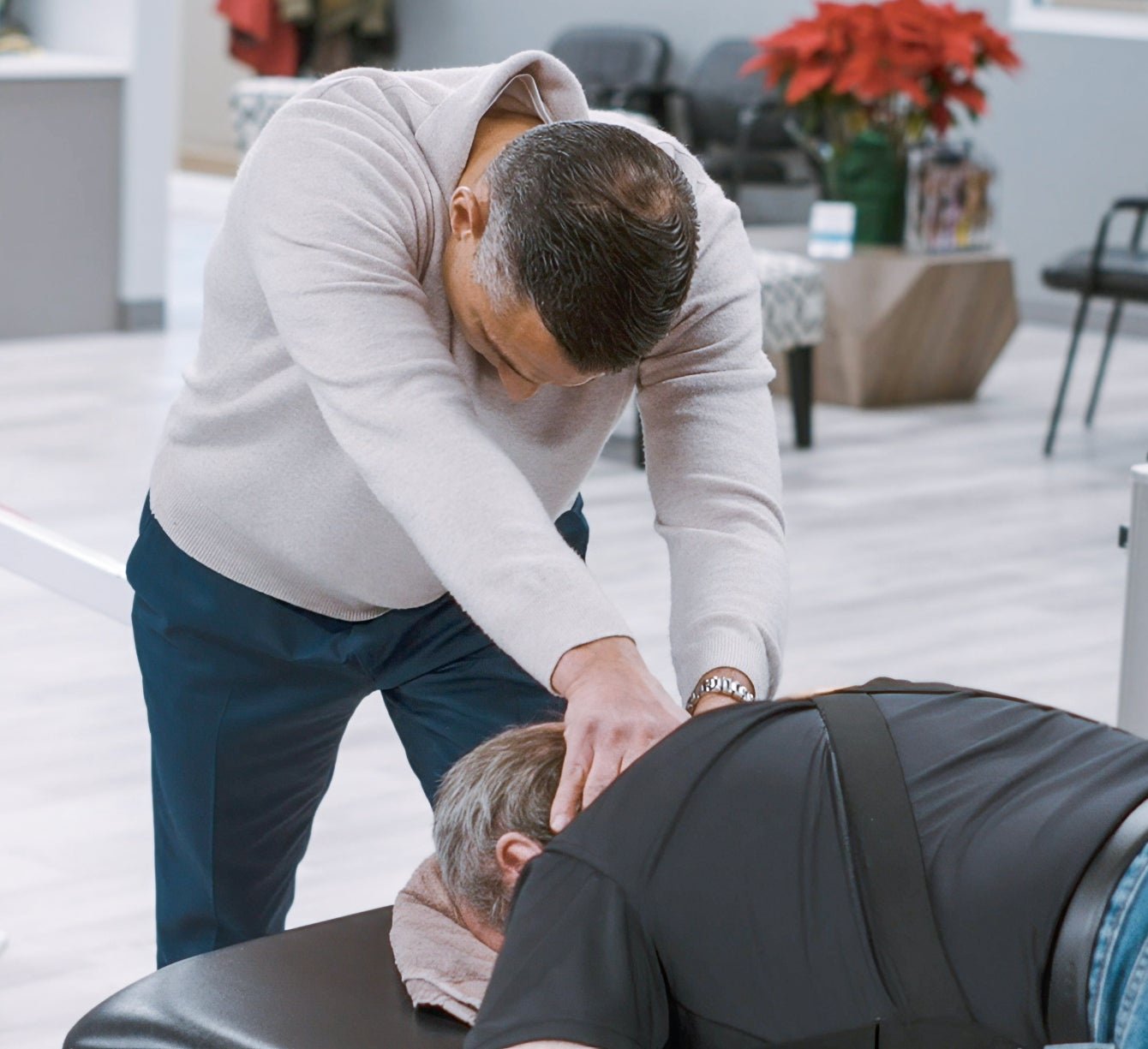
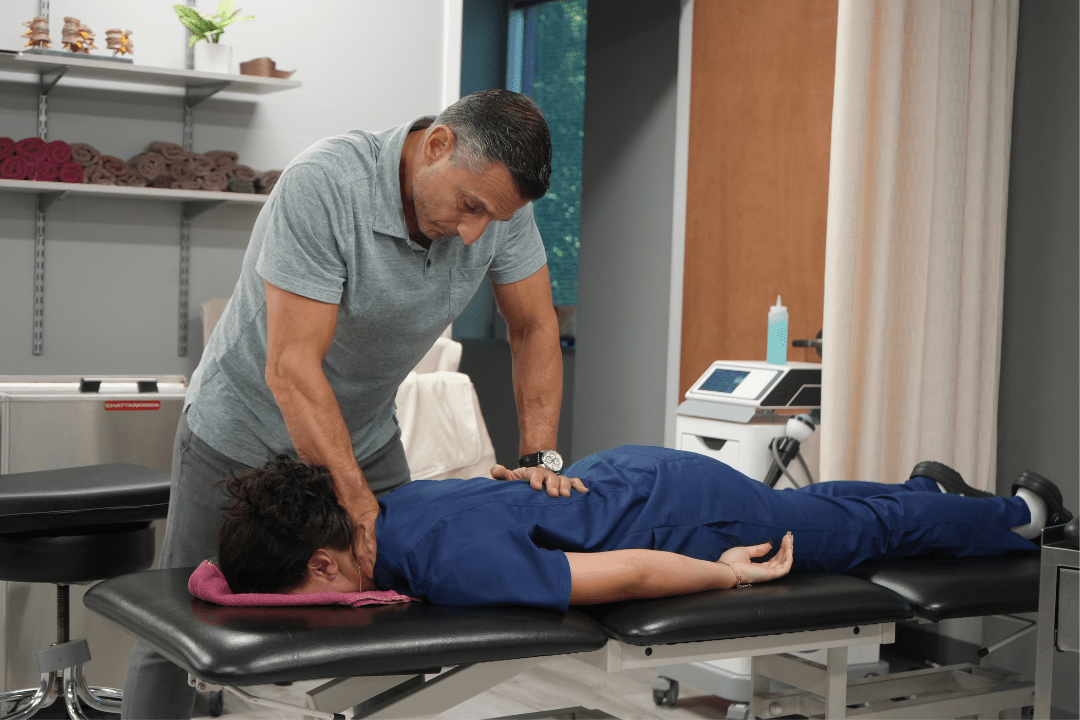
At Spectrum Therapeutics, Dr. Rob Letizia uses an orthopedic manual therapy approach. That means hands-on treatment, not just a sheet of exercises. Here's what a typical treatment plan looks like:
-
Calf and gastrocnemius soft tissue release: Tight calves are one of the biggest drivers of plantar fasciitis. Manual release of the calf muscles and Achilles tendon reduces the pulling force on the heel.
-
Ankle joint mobilization: Restricted ankle dorsiflexion (the ability to bend your foot upward) forces your plantar fascia to absorb more load than it should. Joint mobilization restores that motion.
-
Plantar fascia mobilization: Direct hands-on work to the tissue itself helps break up adhesions, improve blood flow, and reduce pain.
-
Gait and biomechanical assessment: Identifying movement patterns that put excess stress on the plantar fascia so we can correct them and prevent recurrence.
Because every session is one-on-one with Dr. Rob, your treatment is adjusted based on how your body is responding. Nothing is automated or generic.
Home Exercises That Actually Help
You'll leave each visit with specific exercises to do on your own. These are designed to reinforce what's happening in the clinic. Exercises we commonly prescribe include:
-
Calf stretches on a step: Sustained holds targeting both the gastrocnemius and soleus muscles
-
Towel scrunches and marble pickups: Strengthening the small muscles in the foot that support your arch
-
Frozen water bottle roll: Gentle self-mobilization of the plantar fascia with the added benefit of reducing inflammation
-
Eccentric heel drops: Building calf and Achilles tendon strength to reduce strain on the fascia over time
-
Single-leg balance work: Improving foot and ankle stability to distribute load more evenly
Consistency with home exercises makes a noticeable difference in how quickly you recover.
Does "plantar fasciitis" mean the damage is done?
No. The label names where it hurts, not what is driving it. Plantar fasciitis is rarely just a foot problem: tight calves, a stiff ankle, weak arch muscles and the way your hips and knees move can all keep strain on the tissue. Treat only the foot and it stays irritated. An evaluation finds what is causing the overload, then hands-on work and progressive loading exercises address it. Cortisone and insoles can ease pain, but they don't fix the cause.
Physical Therapy vs. Surgery for Plantar Fasciitis
Most podiatrists treat plantar fasciitis with cortisone injections, custom orthotics, and night splints. While these can provide temporary relief, they don't address the biomechanical causes. Physical therapy treats the root cause through calf stretching, manual therapy to the foot and ankle joints, gait analysis, and progressive loading exercises.
Surgery for plantar fasciitis (plantar fasciotomy) has a 70-80% success rate but carries risks of nerve damage, infection, and prolonged recovery. In the largest randomized trial, shockwave produced a successful outcome in 61% of patients versus 42% on placebo (Gerdesmeyer et al., Am J Sports Med 2008, 245 patients) without any surgical risk. Surgery is only needed in 5-10% of cases after 6-12 months of failed conservative treatment.
How Long Does Plantar Fasciitis Take to Heal?
With physical therapy and shockwave therapy at Spectrum Therapeutics, most patients see significant improvement in 4-6 weeks. Complete resolution typically takes 2-3 months. Without treatment, plantar fasciitis can persist for 6-18 months or become a chronic condition. The biggest factor in recovery time is how long the condition has been present before starting treatment, which is one more reason not to wait.
Should I Walk or Rest with Plantar Fasciitis?
Complete rest usually isn't helpful and can actually slow recovery. Walking is fine and even encouraged in most cases, but you may need to temporarily reduce high-impact activities like running or prolonged standing. The goal of physical therapy is to get you moving without pain, not to keep you off your feet. Dr. Rob will help you find the right balance between staying active and giving the tissue what it needs to heal.
Ready to start feeling better? Call Dr. Rob Letizia directly at (973) 689-7123 to schedule your evaluation. Same-day appointments available. No referral needed. Medicare plans require a doctor's script.
I tried cortisone shots, orthotics, night splints. Nothing worked until I saw Dr. Rob. His hands-on treatment finally fixed the actual problem.
✓ Avoided surgery
✓ Full activity
✓ 6 weeks
Your Plantar Fasciitis Recovery Timeline
What most patients experience with consistent treatment
Week 1-2
Soft tissue mobilization, manual therapy to fascia and calf, taping, initial stretching
30-40% improvement
Week 3-4
Progressive loading exercises, intrinsic foot strengthening, gait correction
55-70% improvement
Week 5-6
Return to walking and standing activities, sport-specific progression
80-90% improvement
Week 7-8
Full return to running and impact activities, prevention program, footwear guidance
Full recovery
Ready to start feeling better? Call Dr. Rob Letizia directly at (973) 689-7123 to schedule your evaluation. Same-day appointments available. No referral needed. Medicare plans require a doctor's script.
When to Consider Shockwave Therapy
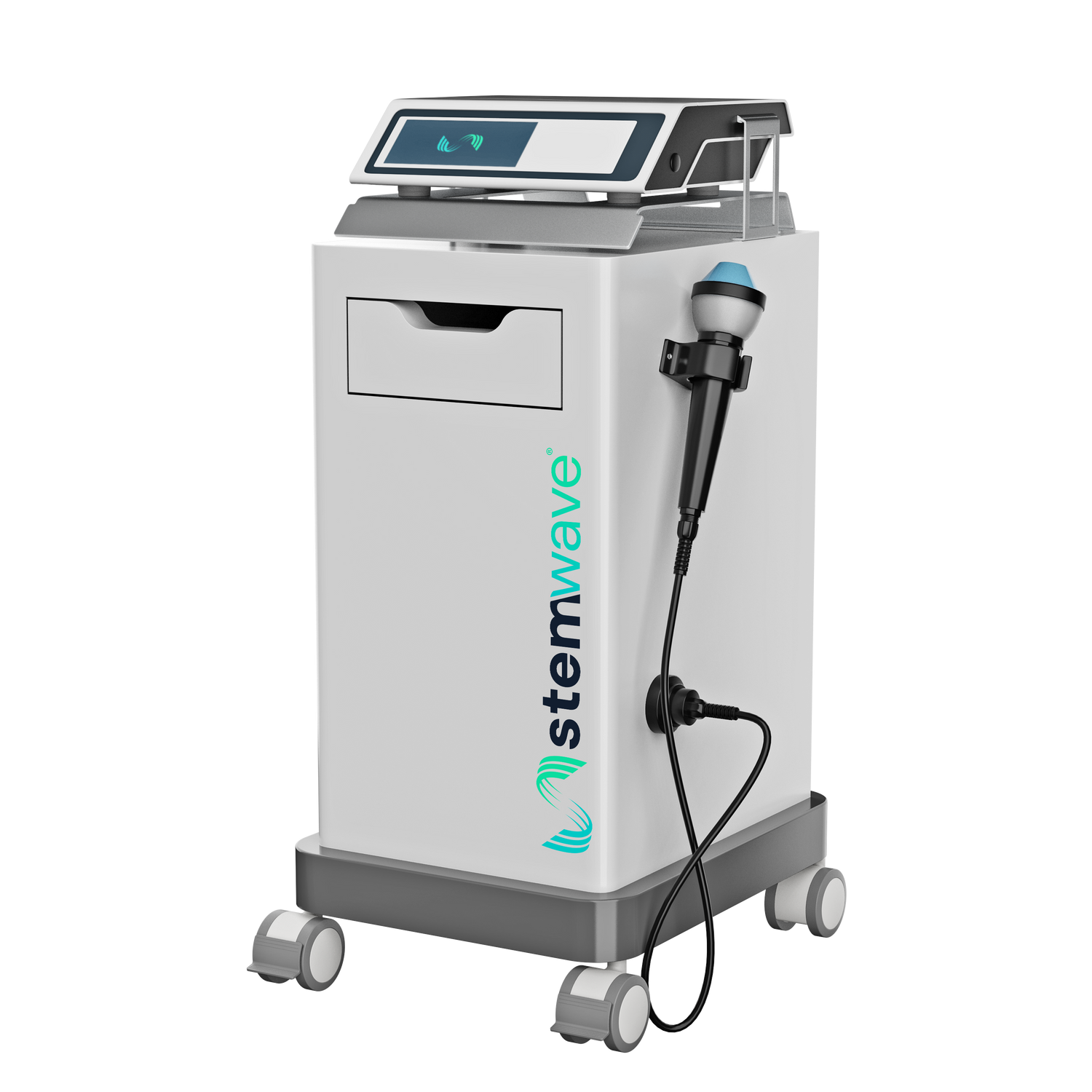
Some cases of plantar fasciitis are stubborn. If you've been in physical therapy for several weeks and your pain has plateaued, or if your condition has been chronic for six months or more, extracorporeal shockwave therapy (ESWT) may be the next step. Shockwave therapy uses acoustic pressure waves to stimulate healing in damaged tissue and is supported by strong clinical evidence for chronic plantar fasciitis. At Spectrum Therapeutics, we also offer focused shockwave therapy (StemWave). In the largest randomized trial, shockwave produced a successful outcome in 61% of patients with chronic plantar fasciitis versus 42% on placebo (Gerdesmeyer et al., Am J Sports Med 2008, 245 patients). We often combine it with ongoing manual therapy for the best outcomes.
Schedule Your Evaluation
If you're dealing with plantar fasciitis and want answers, not just another pair of insoles, call Spectrum Therapeutics of NJ at (973) 689-7123 to schedule an evaluation. Same-day appointments are available, and no referral is needed. Medicare plans require a doctor's script.
Physical therapy for plantar fasciitis is covered by most insurance plans. Shockwave therapy may require additional authorization. We offer a free shockwave assessment to determine the best treatment approach.
What Happens at Your First Visit
Your entire session is 1-on-1 with Dr. Rob — no aides, no waiting
1
Detailed History
We listen to your full story — symptoms, triggers, and what you've tried.
2
Hands-On Exam
Dr. Rob tests your movement and identifies the exact source of pain.
3
Treatment Begins
Manual therapy starts on day one. Most patients feel better before leaving.
4
Clear Game Plan
Diagnosis, timeline, home exercises — zero guesswork about what's next.
★ Recommended
Physical Therapy
✓ Non-invasive, zero downtime
✓ Treats root biomechanical cause
✓ Strengthens foot intrinsic muscles
✓ 1-on-1 expert treatment
✓ Conservative care first, surgery last
Surgery
✗ Fasciotomy risks nerve damage
✗ 6-10 weeks non-weight-bearing
✗ Risk of arch collapse
✗ No guarantee of pain relief
✗ Recovery often 3-6 months
Plantar Fasciitis Treatment in Wayne, NJ
Conditions
Plantar fasciitis, heel spurs, Achilles tendinopathy, flat feet, metatarsalgia
Your Provider
Dr. Rob Letizia, DPT — 25+ years experience
Location
601 Hamburg Tpke Suite 103, Wayne, NJ 07470
Results
90% of patients are pain-free within 6-8 weeks of consistent treatment
Stuck with chronic pain that hasn't responded to PT?
If 6+ weeks of standard PT haven't resolved your heel pain, shockwave (ESWT) is the next-line treatment, with 61% success versus 42% on placebo in a 245-patient randomized trial (Gerdesmeyer et al., Am J Sports Med 2008, 245 patients). Shockwave therapy for plantar fasciitis (main page) at Spectrum Therapeutics in Wayne, NJ.
Frequently Asked Questions About Physical Therapy for Plantar Fasciitis Near Me
Where can I find physical therapy for plantar fasciitis near me in Wayne, NJ?
Spectrum Therapeutics of NJ at 601 Hamburg Turnpike, Suite 103, Wayne, NJ 07470 provides expert plantar fasciitis PT — including dedicated shockwave therapy on-site. Dr. Rob Letizia, DPT treats every patient personally. Call (973) 689-7123.
How long does plantar fasciitis take to heal with PT?
Most patients see 50% symptom reduction in 2–4 weeks and full resolution in 6–12 weeks with manual therapy, progressive loading, and home exercise. Chronic cases (>6 months) may require 12–16 weeks or shockwave therapy.
Is physical therapy for plantar fasciitis near me covered by insurance?
Yes. Plantar fasciitis PT is covered by Medicare, Horizon BCBSNJ, Aetna, Cigna, United, and most commercial plans under standard PT codes. Most patients pay only their copay. Any Medicare plan requires a referral from your doctor for coverage.
Do I need a doctor referral for plantar fasciitis PT in New Jersey?
No. New Jersey direct-access law allows 30 days of PT without a physician referral. Call (973) 689-7123 to schedule directly.
Why is plantar fasciitis worse in the morning?
Overnight the fascia shortens and heals in a shortened position. First-step loading re-stretches and micro-tears the scar tissue. Morning stretches and calf raises before standing reduce this effect within days.
What is the Rathleff protocol for plantar fasciitis?
Heavy slow-resistance single-leg calf raises on a rolled towel (toes up) performed every other day. 2025 research shows superior outcomes vs. standard stretching. Dr. Rob's programs include the Rathleff protocol for appropriate patients.
Can I still run with plantar fasciitis?
With modifications, yes. Reduce volume 30–50%, switch to softer surfaces, and pair with daily calf-complex work. Total rest is usually unnecessary and may actually slow recovery.
Does shockwave therapy work for plantar fasciitis?
Yes — the evidence is strong. In the largest randomized trial, shockwave produced a successful outcome in 61% of patients with chronic plantar fasciitis versus 42% on placebo (Gerdesmeyer et al., Am J Sports Med 2008, 245 patients). Spectrum Therapeutics offers dedicated on-site shockwave therapy for plantar fasciitis.
Are orthotics necessary for plantar fasciitis?
Sometimes helpful, rarely necessary. Off-the-shelf inserts help ~30% of patients short-term. Custom orthotics help another ~20%. Strengthening the foot intrinsics and calf complex beats passive support long-term.
What is the difference between plantar fasciitis and heel spurs?
Heel spurs (bony growths on the calcaneus) are found in 50%+ of patients with plantar fasciitis AND 50% without heel pain. The spur itself is rarely the pain source — treating the fasciitis resolves the pain regardless of spur presence.
Can barefoot walking help or hurt plantar fasciitis?
In acute flares, avoid prolonged barefoot walking on hard surfaces. During recovery, progressive barefoot work on grass or soft surfaces strengthens foot intrinsics and often helps. Dr. Rob individualizes based on your stage.
Does cortisone help plantar fasciitis?
Cortisone injection provides 1–3 months of relief but increases risk of plantar fascia rupture (7–10%) and does not address underlying mechanical issues. PT-first is the evidence-based standard.
Is surgery ever needed for plantar fasciitis?
Rarely — only ~5% of cases. Plantar fascia release surgery is reserved for patients who fail 12+ months of conservative care including PT, shockwave, and orthotics. Even then, outcomes are mixed.
Can I work on my feet all day during plantar fasciitis treatment?
Yes, with modifications. Supportive footwear, activity pacing, and calf-complex stretching during breaks preserve your ability to work. Nurses, teachers, and retail workers are a large portion of our plantar fasciitis patients.
What's the best exercise for plantar fasciitis at home?
1) Wall calf stretch with knee straight AND bent (soleus/gastroc). 2) Towel-rolled heel raises (Rathleff). 3) Frozen water bottle roll under the arch. 4) Toe scrunches/marbles. Details individualized at your evaluation.
Is plantar fasciitis PT painful?
Manual therapy (IASTM instrument-assisted, joint mobilization) is sometimes briefly uncomfortable but not severely painful. Post-session soreness 24–48 hours is normal and indicates tissue remodeling.
How many PT visits will I need for plantar fasciitis?
Typical dosing is 2x per week for 6–10 weeks (12–20 visits total). Add shockwave (3 to 6 sessions) for chronic cases. Home exercise is 10–15 minutes daily.
Do I need a walking boot?
Rarely. Walking boots unload the fascia short-term but cause calf atrophy and gait compensations. Only recommended for severe acute cases with suspected partial fascial tear.
Can plantar fasciitis come back after PT?
Recurrence occurs in ~20–30% of patients who stop home exercises. Continuing the Rathleff-style calf work 2x per week indefinitely dramatically reduces recurrence.
Does weight loss help plantar fasciitis?
Yes. Every 10 lb of weight loss reduces peak plantar fascia load by 30–40 lb during gait. Weight loss accelerates PT outcomes significantly in overweight patients.
What shoes are best during plantar fasciitis recovery?
Structured, cushioned shoes with moderate heel-to-toe drop (~8–10mm) and firm heel counters. Avoid flat shoes (flip-flops), minimalist shoes, and overly soft cushioning during acute flare. Dr. Rob provides brand-agnostic footwear guidance.
Does massage help plantar fasciitis?
Self-massage with a tennis ball or frozen water bottle provides short-term relief and is part of most home programs. Professional myofascial release + IASTM techniques performed in-clinic deliver stronger tissue remodeling.
Is plantar fasciitis the same as plantar fasciosis?
After ~6–8 weeks, the tissue changes are degenerative (not inflammatory) — technically "fasciosis" rather than "fasciitis." The clinical treatment is similar but framing shifts from anti-inflammatory to progressive loading.
Can night splints help plantar fasciitis?
Sometimes. Night splints hold the foot dorsiflexed overnight, reducing morning stiffness. ~50% of patients find them helpful; others find them sleep-disruptive. Worth trying but not mandatory.
Can plantar fasciitis cause knee or hip pain?
Yes. Altered gait from heel pain creates compensations up the kinetic chain — tight hip flexors, glute weakness, inner knee pain. A full-body gait analysis at your first visit identifies these.
Do I need an MRI for plantar fasciitis?
Almost never. Plantar fasciitis is a clinical diagnosis. MRI is reserved for suspected fascial rupture, calcaneal stress fracture, or other structural pathology not responding to treatment.
How is Spectrum Therapeutics different from other plantar fasciitis clinics near me?
Dr. Rob personally treats every session. Dedicated on-site shockwave therapy for stubborn cases. Evidence-based Rathleff-style loading program. 25+ years of experience. 5.0 star rating across 300+ reviews.
Can I get same-day plantar fasciitis PT near me?
Yes. Spectrum Therapeutics offers same-day appointments. Call (973) 689-7123 to book directly with Dr. Rob.
What's the cost of physical therapy for plantar fasciitis near me?
With insurance, typically $20–50 copay per visit. Self-pay rates are transparent — call (973) 689-7123 for current pricing. Most cases resolve in 12–20 total visits.
How do I book physical therapy for plantar fasciitis near me?
Call (973) 689-7123 directly or book online. No referral required under NJ direct access. Same-day availability.
Further Reading: Plantar Fasciitis Treatment Patient Resources
Patient guides from our blog on related topics:
Physical Therapy for Plantar Fasciitis Near You: Serving Passaic, Bergen, Essex, and Morris Counties
Spectrum Therapeutics of NJ provides physical therapy for plantar fasciitis near you for residents of Wayne, Paterson, Totowa, Little Falls, Woodland Park, Pompton Plains, Haledon, Hawthorne, Fair Lawn, Paramus, Clifton, Montclair, West Caldwell, Caldwell, Cedar Grove, Lincoln Park, Pompton Lakes, Fairfield, Verona, and Bloomfield.
601 Hamburg Turnpike, Suite 103, Wayne, NJ 07470 · (973) 689-7123 · View on Google Maps
↑ Part of Conditions We Treat