Medically reviewed by Dr. Rob Letizia, PT, DPT · Doctor of Physical Therapy, 25+ years treating spine & orthopedic conditions · Last reviewed 2026-06-03
TMJ Physical Therapy in Wayne, NJ: A Complete Guide to Jaw Pain Treatment
I get it. You have been told your jaw clicking is just stress and to buy a night guard. That is treating a symptom, not the problem. At Spectrum Therapeutics, TMJ treatment starts with figuring out exactly why your jaw hurts, clicks, locks, or refers pain to your head and neck. Then we fix the cause with hands-on manual therapy that most clinics and dentists do not offer.
Temporomandibular joint dysfunction affects an estimated 10 million Americans, and most of them cycle through night guards, muscle relaxants, and frustration before finding out that physical therapy is the most effective conservative treatment. A 2022 systematic review found manual therapy applied to the craniomandibular structures improves pain and function in temporomandibular disorders (Asquini et al., Journal of Oral Rehabilitation 2022, PMID 34931336). That is the approach Dr. Rob has used for over 25 years.
On This Page
🔓
TMJ Disc Displacement
The articular disc shifts out of position, causing clicking, popping, or jaw locking during opening.
😣
Myofascial Jaw Pain
Trigger points in the masseter, temporalis, and pterygoid muscles causing facial pain and headaches.
😤
Bruxism / Clenching
Teeth grinding and jaw clenching that overloads the TMJ and surrounding muscles, often during sleep.
🦴
Cervicogenic TMJ
Jaw dysfunction driven by neck problems. Forward head posture and cervical stiffness alter jaw mechanics.
🦷
Post-Dental TMJ
Jaw pain following dental procedures from prolonged mouth opening, altered bite, or post-surgical tension.
🧠
Stress-Related TMJ
Chronic stress drives jaw clenching and muscle tension. Treatment addresses both physical and behavioral patterns.
85%
of TMJ patients achieve full resolution with manual therapy — without dental appliances or surgery
🎓
Evidence-Based TMJ Treatment
✅
NJ Direct Access — No Referral
📋
Most Insurance Accepted
Understanding TMJ Dysfunction: Anatomy and Causes
The temporomandibular joint is one of the most complex joints in the body. It is a modified hinge joint that also glides and rotates, which is why jaw problems are so varied and confusing. Here is what is actually happening inside your jaw when things go wrong.
The TMJ consists of the mandibular condyle (the rounded end of your jawbone) sitting inside the temporal fossa of your skull. Between them is an articular disc made of fibrocartilage that cushions the joint and allows smooth movement. This disc is held in place by ligaments and the lateral pterygoid muscle, which attaches directly to it.
When the lateral pterygoid becomes overactive from clenching or stress, it pulls the disc forward. This is disc displacement. If the disc snaps back into place during opening, you hear a click. If it stays displaced, the jaw locks or deviates to one side. This is the mechanism behind 70% of TMJ disorders.
The muscles of mastication, the masseter, temporalis, medial pterygoid, and lateral pterygoid, generate enormous force. The masseter alone can produce over 150 pounds of bite force. When these muscles develop trigger points from chronic clenching or postural strain, they refer pain to the temples, behind the eyes, into the ear, and across the cheekbone. Many patients are treated for migraines, ear infections, or sinus problems when the actual source is muscular TMJ dysfunction.
TMJ dysfunction also involves the cervical spine. The muscles connecting the jaw to the neck, particularly the suprahyoid and infrahyoid groups, create a mechanical link between head position and jaw function. Forward head posture changes the resting position of the mandible, increasing load on the TMJ. This is why treating the jaw without treating the neck often fails.
How Dr. Rob Diagnoses TMJ Disorders
An accurate TMJ diagnosis requires more than asking where it hurts. Dr. Rob performs a systematic clinical examination that evaluates every structure that could be contributing to your jaw pain.
Jaw range of motion measurement: Normal mouth opening is 40-50mm, roughly the width of three fingers stacked vertically. Dr. Rob measures active opening, passive opening, lateral excursion (side-to-side movement), and protrusion. Limitations in specific directions point to specific structures. For example, limited opening with a hard end-feel suggests joint restriction, while limited opening with muscle guarding suggests myofascial involvement.
Palpation of muscles of mastication: Dr. Rob systematically palpates the masseter (both superficial and deep layers), temporalis (anterior, middle, and posterior fibers), the medial pterygoid (accessed intraorally), and the lateral pterygoid (also intraoral). Trigger points in each muscle produce characteristic referral patterns. Masseter trigger points refer to the cheek and lower jaw. Temporalis trigger points refer to the temple and eyebrow region. Lateral pterygoid trigger points cause deep jaw and ear pain.
Joint sounds assessment: Using palpation over both TMJs simultaneously during opening and closing, Dr. Rob identifies clicking (disc displacement with reduction), crepitus (arthritic changes), and popping (disc recapture). The timing of the click during opening helps determine the severity of disc displacement.
Cervical spine screening: Because 70% of TMJ patients have concurrent cervical dysfunction, Dr. Rob evaluates cervical range of motion, upper cervical joint mobility, and the suboccipital muscles. Treating the neck alongside the jaw improves TMJ outcomes, which is why we examine both.
Postural assessment: Forward head posture, rounded shoulders, and thoracic kyphosis all alter mandibular mechanics. Dr. Rob evaluates your resting head position and its relationship to your jaw symptoms.
The TMJ Rehabilitation Program at Spectrum Therapeutics
1
Intraoral Pterygoid Release
Gentle manual release of the lateral and medial pterygoid muscles performed with a gloved finger inside the mouth. Targets the primary driver of disc displacement and deep jaw pain.
2
TMJ Joint Mobilization
Distraction and translation mobilizations of the TMJ to restore joint play, reduce clicking, and improve opening range. Applied with precise graded force.
3
Cervical Spine Mobilization
Upper cervical joint mobilization to address the neck dysfunction that drives TMJ problems. Targets C0-C3 segments and the suboccipital muscles.
4
Myofascial Release
Soft tissue mobilization of the masseter, temporalis, SCM, and suboccipital muscles. Eliminates trigger points and referred pain patterns.
The TMJ Rehabilitation Program serves patients across Northern New Jersey
Spectrum Therapeutics treats TMJ dysfunction, jaw clicking and locking, jaw pain that has not settled with a night guard, and TMJ-related headaches for patients who drive in from Clifton, Totowa, Little Falls, Woodland Park, Pompton Lakes, Hawthorne, Paterson and Pequannock — typically 8 to 15 minutes from our Wayne clinic at 601 Hamburg Turnpike, Suite 103, Wayne, NJ 07470, serving Passaic, Bergen, Essex and Morris County communities across northern New Jersey.
Manual Therapy Techniques for TMJ: What Makes Our Approach Different
Most clinics that claim to treat TMJ give you jaw exercises and maybe some ultrasound. That is not manual therapy. At Spectrum Therapeutics, TMJ treatment is hands-on, starting with the first visit. Here is what that actually involves.
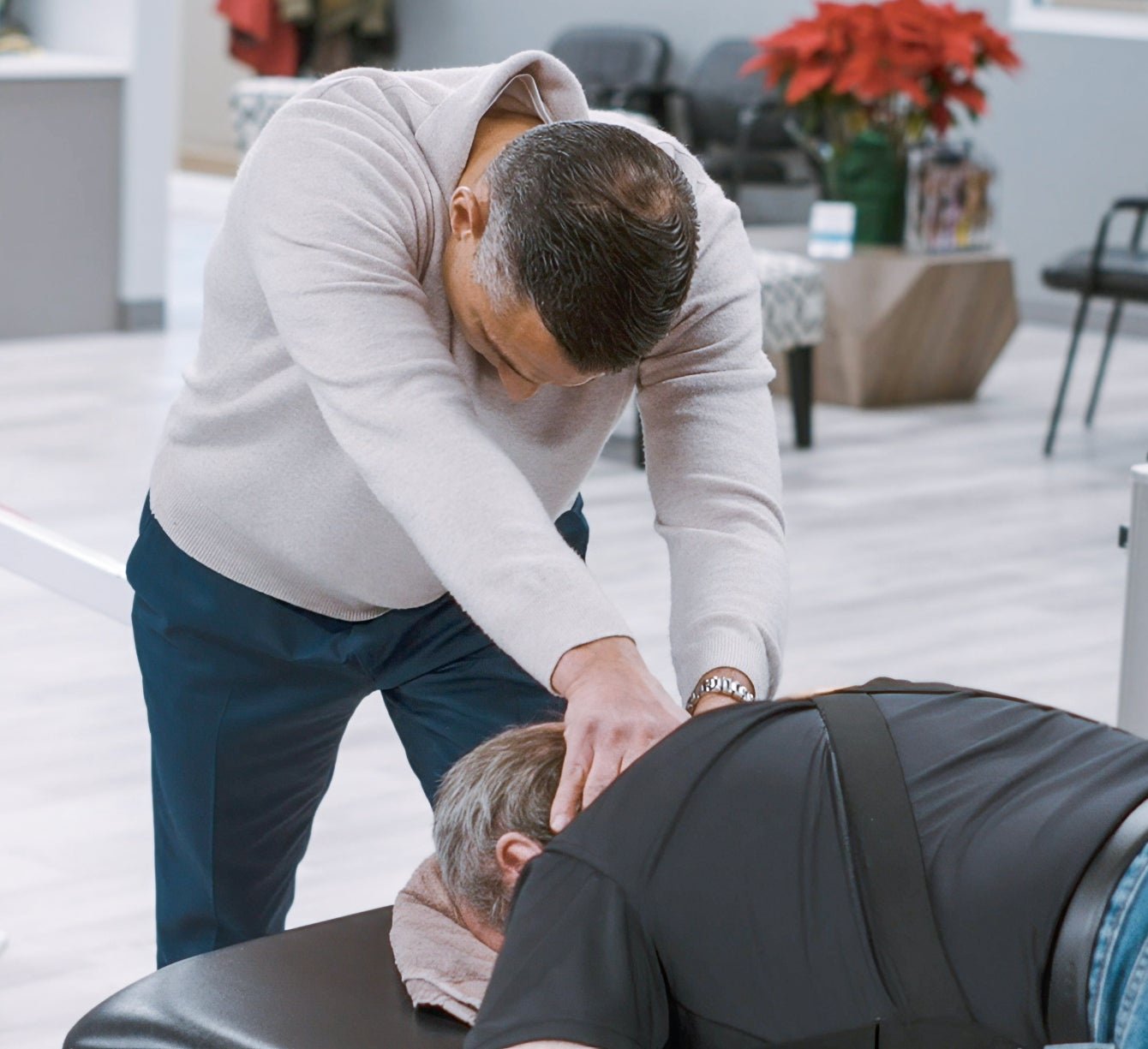
Intraoral pterygoid release is the single most important technique for TMJ disorders and the one most clinics skip because it requires specific training. Dr. Rob uses a gloved finger inside the mouth to access the lateral pterygoid where it attaches to the TMJ disc and the medial pterygoid on the inner surface of the mandible. These muscles are the primary drivers of disc displacement, jaw clenching, and deep jaw pain. The release is precise and controlled. Most patients feel significant jaw relaxation within the first session.
TMJ joint mobilization uses graded distraction (pulling the jaw downward) and lateral glide techniques to restore the normal mechanics of the joint. When the TMJ loses its normal glide, the condyle compresses the disc instead of rolling smoothly over it. Mobilization restores that glide, reduces clicking, and increases pain-free opening range. Dr. Rob applies these techniques with his hands directly on the mandibular condyle, feeling the joint response in real time.
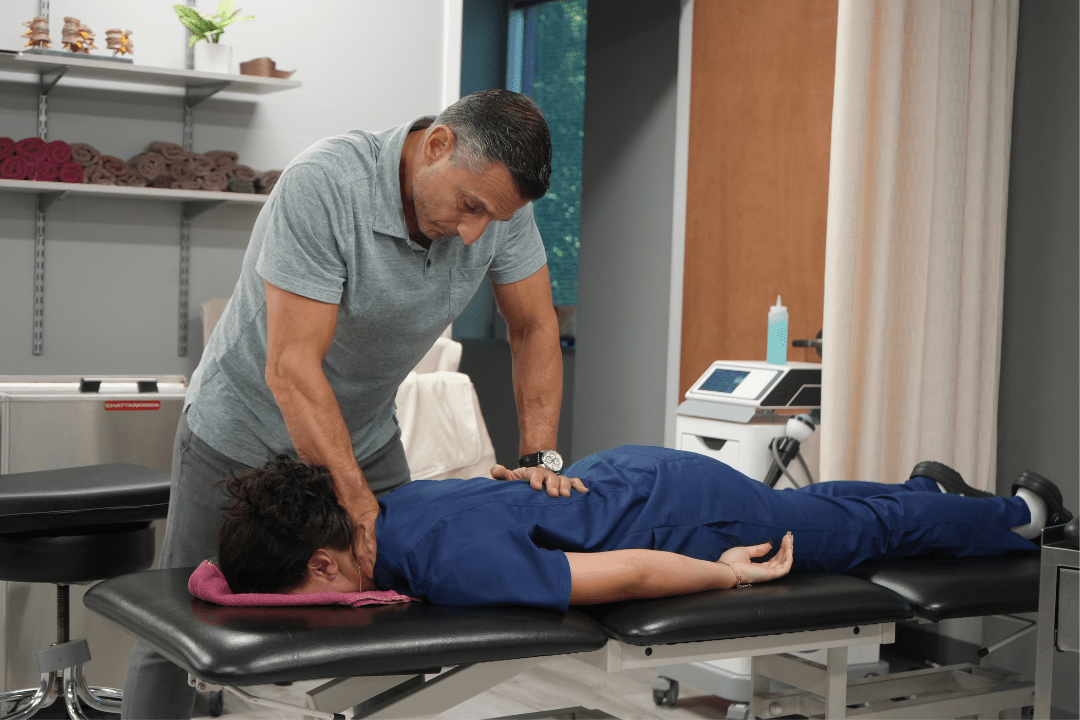
Cervical spine treatment is non-negotiable in TMJ rehabilitation. Dr. Rob mobilizes the upper cervical joints (occiput-C1 and C1-C2), releases the suboccipital muscles, and addresses SCM and upper trapezius trigger points. This reduces the mechanical strain on the jaw from poor head and neck posture and interrupts the pain cycle between the neck and jaw.
A 2022 systematic review of manual therapy applied to the craniomandibular structures in temporomandibular disorders found it improves pain and function (Asquini et al., Journal of Oral Rehabilitation 2022;49(4):442-455, PMID 34931336). This is the evidence behind our approach.
I had jaw pain and headaches for two years. My dentist made me a custom night guard that cost $800 and did nothing. My doctor put me on muscle relaxants. Nothing changed. Dr. Rob found trigger points in my jaw muscles and stiffness in my upper neck within five minutes of his exam. After three visits, my headaches dropped from daily to maybe once a week. By six visits, they were gone. I cannot believe how long I suffered because nobody actually put their hands on the problem.
Headache-free in 6 visits
Full jaw function restored
At-Home TMJ Exercises and Self-Management
Manual therapy gets your jaw moving and pain-free in the clinic. Home exercises maintain those gains and prevent recurrence between sessions. Dr. Rob prescribes specific exercises based on your diagnosis. Here are the most common categories.
Controlled jaw opening: Place your tongue on the roof of your mouth behind your front teeth. Slowly open your mouth as wide as you can while keeping your tongue in contact with the palate. This prevents the jaw from translating forward and trains proper opening mechanics. Perform 10 repetitions, 3 times per day.
Lateral jaw glides: With your mouth slightly open, slowly slide your lower jaw to the right, hold 5 seconds, return to center, then slide to the left. This mobilizes the TMJ in the direction that is often restricted. Perform 10 repetitions each direction, 2 times per day.
Chin tucks: Sit upright, gently tuck your chin straight back as if making a double chin. Hold 5 seconds, relax. This corrects forward head posture and reduces strain on the TMJ. Perform 15 repetitions, 3 times per day, especially if you work at a desk.
Tongue-up resting position: Train yourself to maintain your tongue on the roof of your mouth with your teeth slightly apart when at rest. This is the proper resting position for the jaw and reduces habitual clenching. Set reminders throughout the day until it becomes automatic.
Self-massage of the masseter: Using your fingertips, apply firm circular pressure to the masseter muscle (the large muscle on the side of your jaw that you feel when you clench). Work from the cheekbone down to the jawline for 60 seconds each side. Perform 2-3 times per day, especially before bed.
Diaphragmatic breathing: Stress is a major driver of jaw clenching. Practice slow breathing with a 4-second inhale and 6-second exhale for 5 minutes before bed. This activates the parasympathetic nervous system and reduces unconscious clenching during sleep.
The TMJ-Neck Connection: Why Treating the Jaw Alone Often Fails
This is the piece that most TMJ providers miss entirely. Your jaw and neck are mechanically linked through shared muscles, nerves, and biomechanics. In our experience most people with TMJ pain also have neck dysfunction, and treating both together works better than treating either alone — which is why the neck is examined at every TMJ evaluation here.
Here is why the connection matters. Forward head posture shifts the weight of your head anterior to your center of gravity. For every inch your head sits forward, the load on your cervical spine increases by approximately 10 pounds. This forces the suboccipital muscles and SCM to work harder to hold your head up. These overworked neck muscles pull on the hyoid bone and mandible, changing the resting position of your jaw. The result is increased TMJ compression, altered disc mechanics, and chronic muscle tension in both the jaw and neck.
At Spectrum Therapeutics, TMJ treatment always includes cervical spine assessment and treatment. Dr. Rob mobilizes the upper cervical joints, releases the suboccipital muscles, and corrects forward head posture with targeted exercises. Patients consistently report that their jaw improves faster when the neck is treated simultaneously. This is not a surprise because the anatomy demands it.
When should you see a physical therapist for TMJ or jaw pain? The 4-6 Week Night-Guard Rule
Do not wait until your jaw locks shut to seek treatment. The earlier TMJ dysfunction is treated, the faster it resolves. Here are the signs that you should schedule an evaluation:
-
Jaw clicking or popping that is increasing in frequency or becoming painful
-
Jaw locking in the open or closed position, even briefly
-
Progressive limitation in opening — you can no longer bite into a sandwich or yawn fully
-
Headaches 3 or more times per week that originate in the temples, behind the eyes, or across the forehead
-
Ear pain without infection — TMJ dysfunction commonly mimics ear problems
-
Pain with eating, especially hard or chewy foods
-
Facial pain that your doctor cannot explain
-
Night guard not working — if a dental appliance has not reduced your symptoms after 4-6 weeks
Ready to start feeling better? Call Dr. Rob Letizia directly at (973) 689-7123 to schedule your evaluation. Same-day appointments available. No referral needed — except on Medicare, which requires a script from your doctor.
TMJ Recovery Timeline
What to Expect During TMJ Treatment
Week 1
Initial evaluation, first manual therapy session including intraoral work and cervical treatment. Home exercise program established.
30-40% improvement
Week 2-3
Progressive joint mobilization, deeper muscle release techniques, jaw retraining exercises, postural correction
55-70% improvement
Week 4-5
Advanced jaw mechanics training, cervical spine treatment, stress management techniques, functional eating progression
80-90% improvement
Week 6-8
Return to normal eating, prevention strategies, independent self-management program. Most patients are fully resolved.
Full recovery
Physical Therapy vs. Other TMJ Treatments
TMJ physical therapy is a first-line treatment recommended before dental appliances, Botox injections, or surgery. Manual therapy to the jaw joint and surrounding muscles, combined with postural correction and stress management techniques, resolves TMJ pain in 80% of cases. Unlike mouth guards that only manage symptoms, physical therapy addresses the root cause of jaw dysfunction.
★ Recommended
Physical Therapy
✓ Non-invasive manual therapy
✓ Treats jaw AND neck together
✓ No expensive dental appliances
✓ Intraoral techniques target the cause
✓ 1-on-1 expert treatment
✓ Most cases resolve in 5-8 visits
Other Treatments
✗ Night guards cost $500-1,500 and manage symptoms only
✗ Botox injections are temporary (3-4 months)
✗ Muscle relaxants cause drowsiness
✗ TMJ surgery has variable outcomes
✗ Most approaches ignore the neck
✗ Risk of surgical nerve damage
What Happens at Your First TMJ Visit
Your entire session is 1-on-1 with Dr. Rob — no aides, no waiting
1
Detailed History
We listen to your full story — jaw symptoms, headaches, clenching habits, and what you have tried.
2
Hands-On TMJ Exam
Dr. Rob evaluates jaw movement, muscle trigger points, joint sounds, and cervical spine involvement.
3
Treatment Begins
Intraoral manual therapy and cervical treatment start on day one. Most patients feel improvement before leaving.
4
Clear Game Plan
Diagnosis, timeline, home exercises, and jaw management strategies — zero guesswork.
TMJ Treatment in Wayne, NJ
Conditions
TMJ disc displacement, myofascial jaw pain, bruxism, cervicogenic TMJ, post-dental TMJ, chronic headaches from jaw dysfunction
Your Provider
Dr. Rob Letizia, DPT — TMJ manual therapy specialist with 25+ years of experience
Location
601 Hamburg Tpke Suite 103, Wayne, NJ 07470
Results
85% of patients achieve full resolution with manual therapy in 5-8 visits
601 Hamburg Turnpike, Suite 103, Wayne, NJ 07470 · (973) 689-7123 · View on Google Maps
↑ Part of Conditions We Treat